

Relying entirely on someone else’s numbers has limits, since no single list can capture every trend happening across every server at once. Learning to build your own value list gives you a personal reference that reflects exactly what you’ve seen happen in real trades, not just what a spreadsheet claims. Tracking the offers you actually witness, the fruits that move fast, and the ones that sit untouched builds a picture that’s grounded in reality rather than guesswork. Over time, this personal list becomes more reliable than any single outside source, because it’s built from patterns you’ve confirmed yourself.
Why a Personal List Beats Guesswork
A personal value sheet built from actual experience is often more reliable for your own trading style than a generic list, since it’s shaped by the specific fruits and trades you actually deal with.
Gathering Reliable Data From Multiple Sources
Gather data from multiple sources before writing anything down. Combine a couple of trusted websites with activity from trading Discords, so your list isn’t shaped by a single, possibly biased, source.
Organizing Fruits by Rarity and Demand
Organize fruits by rarity first, then layer in demand notes underneath. This two-step structure makes your list easier to scan quickly, rather than sorting everything by one flat number.
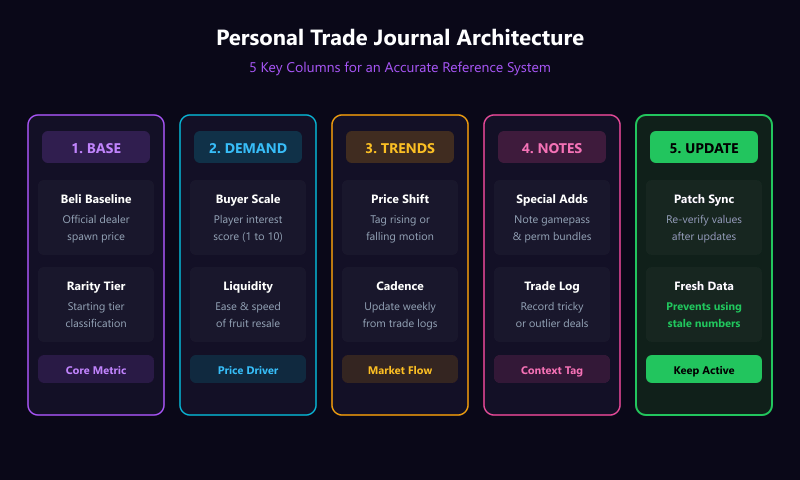
Updating Your List After Every Patch
Update your list after patches without exception. Even a small balance change can shift a fruit’s real value enough to make an old entry misleading if left untouched.
Tracking Value Trends Over Time
Track value trends over time by noting whether a fruit is rising, falling, or holding steady. A simple trend tag next to each entry adds useful context that a flat number alone can’t capture.
| Column | Purpose | Example Entry |
|---|---|---|
| Base value | Rough starting number | 4x normal fruit stock |
| Demand note | Current interest level | High, actively requested |
| Trend tag | Rising, falling, or stable | Rising after rework |
| Last checked | Date of your last verification | Updated this week |
| Source | Where the data came from | Confirmed via Discord trade |
Adding Notes for Tricky Trade Cases
Add notes for tricky trades you’ve personally witnessed or taken part in. These small details often explain exceptions that a plain numeric list would otherwise miss entirely. A single sentence explaining why a trade felt off, even when the numbers technically lined up, can prevent you from repeating the same mistake the next time a similar offer comes along.
Sharing Your List With Trusted Traders
Share your list with traders you trust for feedback. A second opinion can catch mistakes early, especially on fruits you haven’t traded personally and are relying on secondhand information for.
Avoiding Bias From Your Own Fruits
Avoid bias from your own fruits — it’s tempting to overvalue what you personally own. Stay honest with the numbers, even when it means admitting a fruit you’re holding isn’t worth quite as much as hoped. Asking a trading friend to review your own fruits’ entries specifically is one of the fastest ways to catch inflated numbers you might not notice on your own.
Keeping the List Simple and Readable
Keep the list simple and clear rather than cramming in every possible detail. A clean layout you’ll actually reopen and use beats a complicated spreadsheet you abandon after the first week.
Reviewing and Refining It Regularly
Review and refine regularly, treating the list as a living document rather than a finished project. As the market shifts, your notes should shift with it, keeping the whole list genuinely useful over time. Set a recurring reminder every few weeks rather than relying on memory, since it’s easy to let a list slide for months without noticing how far it’s drifted from the current market, especially right after a wave of updates reshuffles which fruits are actually in demand.