
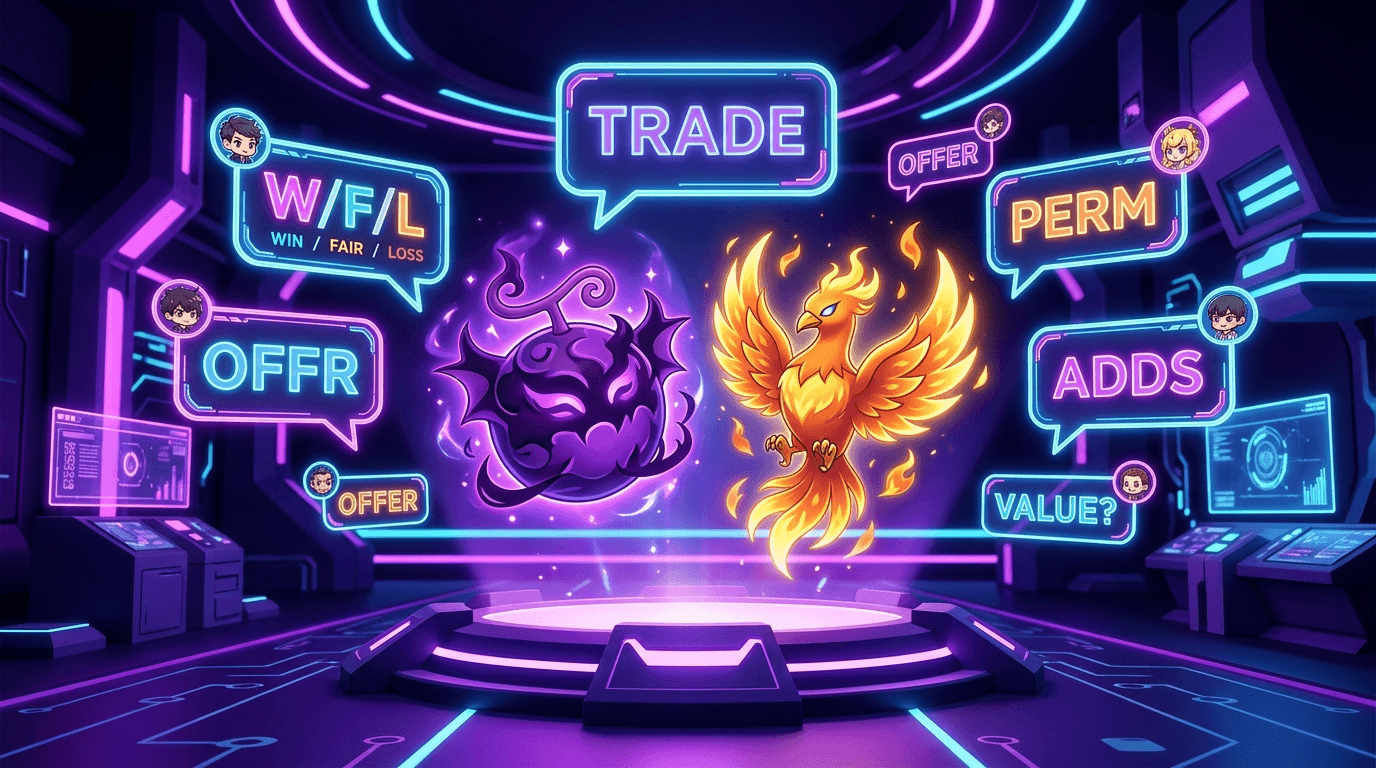
Jumping into a trade chat for the first time can feel like reading another language. Shorthand gets thrown around fast, and offers that look straightforward in plain English can hide a completely different meaning once trading slang is involved. Every trader needs to learn trading terms fast, or risk misunderstanding an offer that seemed simple at first glance, sometimes agreeing to something they never actually meant to accept. A single misread term can turn what looked like a fair deal into a regret a few minutes later. Once the common terms and slang start to click, trade chats stop feeling confusing and start feeling like a language you’re actually fluent in.
Why Trading Slang Confuses New Players
Most trading vocabulary develops naturally inside communities, without any official glossary. New players often avoid confusion in trade chat simply by asking rather than guessing what a shorthand term means.
Common Terms Every Trader Should Know
A handful of phrases show up constantly across every server. Building basic community terms knowledge early makes every future trade conversation far easier to follow without needing constant clarification.
Understanding “W” and “L” Trade Slang
Understand W and L slang early, since it’s used everywhere. A W trade means one side benefits more, while an L trade means the opposite — neither automatically means the deal was unfair overall.
Learning What “OG” and “Rare” Really Mean
An OG fruit usually refers to an original, older item with sentimental or rarity-driven value, separate from its current in-game rarity label. Confusing this with a simple rare fruit tag is a common beginner mistake.
Decoding Abbreviations Used in Trade Chats
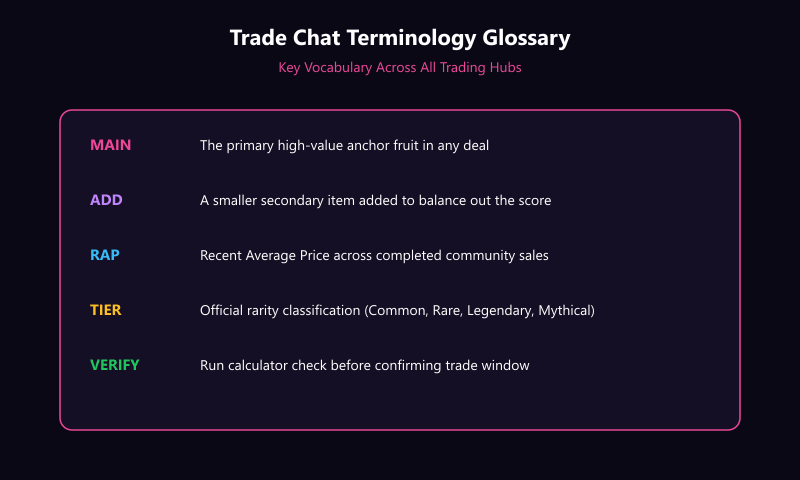
Decode trade chat abbreviations like NGF, RAP, or main/add labels before jumping into a real conversation. A trade dictionary kept open in another tab makes this process far less overwhelming. Keeping a short personal list of terms you’ve looked up once means you’ll rarely need to search for the same abbreviation twice, and it becomes a handy reference during faster-paced trade conversations.
| Term | Common Meaning | Example Use |
|---|---|---|
| W / L | Win or loss side of a trade | "That's a W for you" |
| Main | The primary item in the trade | "What's your main?" |
| Add | A smaller item included to balance value | "Add a gamepass to fix it" |
| OG | An original, long-held item | "It's an OG fruit" |
| NGF | No good fruits, meaning low-value offer | "NGF, add something" |
Where Experienced Traders Explain Terms
Ask experienced traders directly when a phrase isn’t clear. Most active communities welcome genuine questions far more than they welcome someone guessing wrong and causing a misunderstanding mid-trade.
Watching Trade Videos to Learn Faster
Watch trade videos to learn how real conversations flow. Seeing terms used in context sticks better than reading a definition alone, since tone and timing matter just as much as the words themselves.
Joining Communities That Welcome Beginners
Look for a beginner friendly server where questions are encouraged rather than mocked. These spaces are usually where new traders build trading vocabulary confidence the fastest.
Practicing Terms in Low-Stakes Trades
Practice terms in small trades before attempting anything valuable. Using new vocabulary in a low-pressure setting helps it stick without the anxiety of risking an item you actually care about. Even a casual trade for a common fruit gives you a real chance to use new vocabulary naturally, which builds far more confidence than simply reading example conversations without ever typing a reply yourself.
Building Confidence Through Trading Vocabulary
Over time, trade lingo stops feeling like a barrier and starts feeling like second nature. Understanding community-specific lingo fluently is often what separates a comfortable, confident trader from someone still hesitating over every message. That comfort carries over into every future negotiation, since understanding the language traders use lets you focus entirely on the value of the deal instead of decoding what someone just said.