

A messy trade can cost hours of grinding in seconds. That’s exactly why so many players now use a trade calculator before agreeing to anything. It turns guesswork into a clear, numbers-based decision, so both sides know exactly what they’re putting on the table. Trading without checking numbers usually ends one way — someone walks away with less than they gave. A calculator lets you check trade value instantly instead of relying on memory or hype. It pulls from a shared value database, so the numbers reflect what the wider community actually agrees on, not just one trader’s opinion.
Understanding Fruit Value Numbers
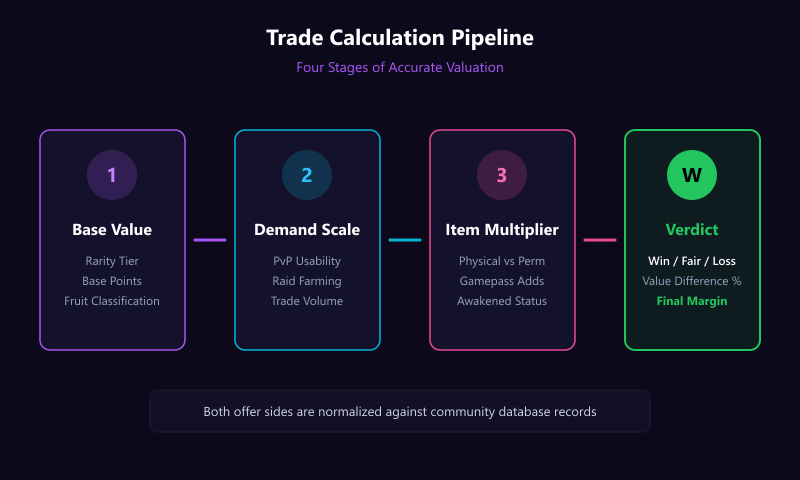
Every fruit carries a base value built from rarity, usefulness, and how often it’s traded. On top of that sits a rarity multiplier and, for some fruits, an ability multiplier tied to combat performance. Together these create the number you see on a listing — a rough normalized value score rather than a fixed price tag.
Entering Your Fruits Into the Calculator
Most tools let you add up to four items per side. Start by opening the calculator and selecting your fruits one at a time, then move to the other trader’s offer. Take time to build your offer side carefully — a wrong entry here throws off the entire result before you even reach the verdict.
Reading the Trade Result Screen
Once both sides are filled in, the tool will get instant result showing a win, fair, or loss outcome. This is the W/F/L result most traders talk about. Alongside it you’ll usually see a percentage difference, which tells you exactly how far apart the two offers really are in raw beli value.
Accounting for Permanent vs Physical Fruits
Not all fruits are equal even when they share a name. You need to choose physical or permanent before trusting any number, since a permanent fruit almost always carries more weight than its physical fruit version. Skipping this toggle is one of the fastest ways to misread a fair trade as a loss.
Adjusting for Godhuman and Awakening Bonuses
Fighting styles and awakened abilities change how a fruit performs, which feeds directly into its demand rating. A calculator that lets you flag awakening status will adjust the value comparison accordingly, since an awakened fruit’s real-world usefulness rarely matches its unawakened baseline.
Comparing Calculator Results With Community Prices
No single tool has the final word. It helps to compare trades across tiers and cross-check the same fruits against a few different value lists. When two or three sources roughly agree, you can trust the number; when they don’t, treat the result as a starting point, not gospel.
| Value Check Step | What to Look For | Why It Matters |
|---|---|---|
| Base value | Matches rarity and current demand | Sets the starting reference number |
| Physical or permanent | Correct toggle selected | Wrong toggle skews the whole result |
| Awakening status | Reflected in ability multiplier | Awakened fruits perform differently |
| Gamepass or accessory | Added to the correct side | Small extras shift the final total |
| Community cross-check | Two or more sources agree | Confirms the number is still current |
Common Mistakes While Using a Calculator
Rushing through entries is the biggest issue. Players often forget to toggle physical or permanent, skip gamepasses, or ignore accessories that add real value. Others chase a specific number without checking whether it’s still current, which leads straight into an unfair deal dressed up as a good one.
Double-Checking Before Confirming a Trade
Before you commit, review the full offer one more time inside the actual trade window, not just the calculator tab. Names, versions, and item counts should match exactly what the calculator scored. This simple habit helps avoid getting scammed through last-second swaps or added filler items.
Trusting the Numbers Without Overthinking
A calculator is meant to guide decisions, not replace judgment entirely. Once you know the flow before trading — enter, compare, verify, confirm — the process becomes second nature. Trust the verdict when it’s backed by solid, recent data, and you’ll consistently spot undervalued trades instead of second-guessing every offer that comes your way.