
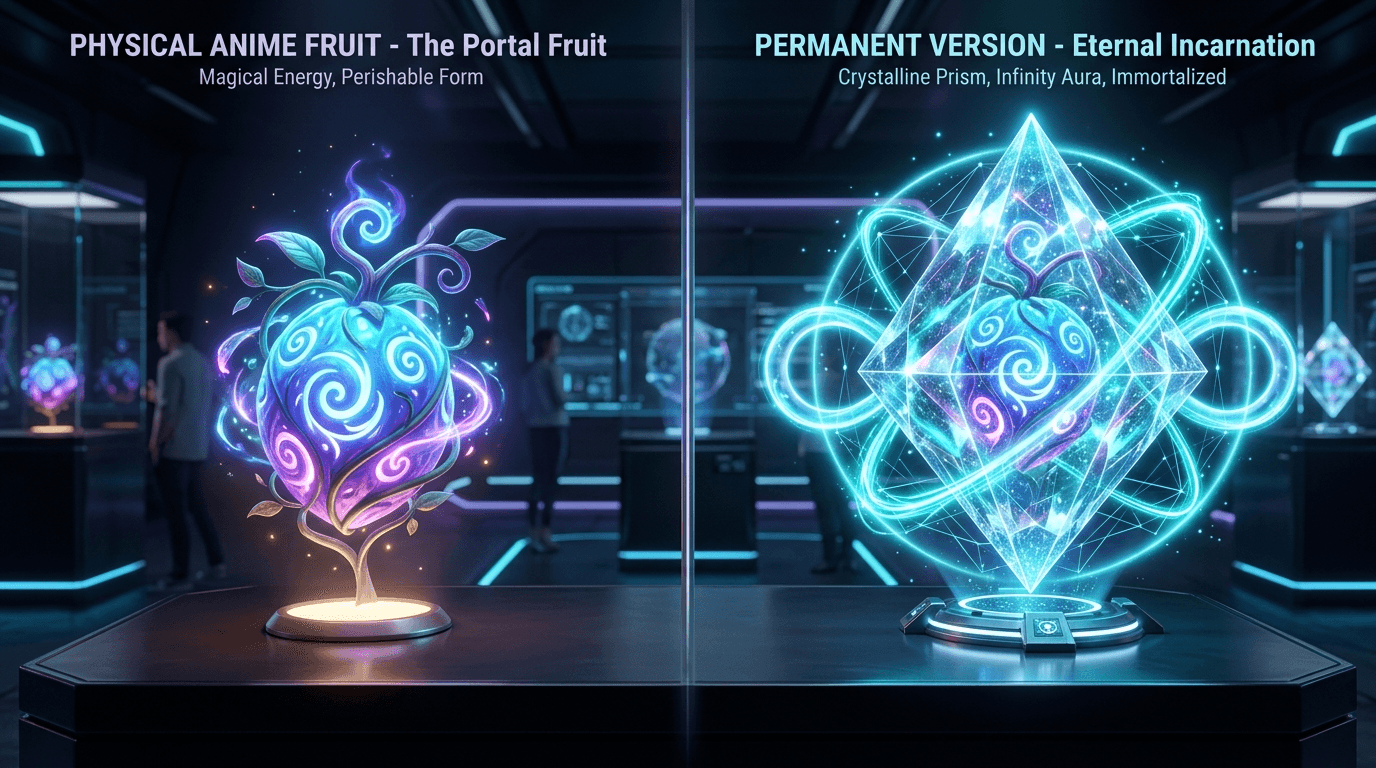
Two versions of the same fruit can carry very different weight in a trade. On paper they share a name, but in practice a permanent fruit almost always outvalues its physical counterpart by a noticeable margin. Learning to compare permanent vs physical values properly prevents one of the most common mix-ups new traders run into, one that can quietly turn a fair-looking trade into a loss. The gap exists because permanent fruits save a player an inventory slot for good, while physical ones still take up space until reused or sold. Once you know exactly where to check this distinction before trading, mixing up the two versions stops being a costly mistake and becomes an easy thing to avoid.
Understanding the Core Difference Between Types
A permanent fruit stays in your inventory forever, usually purchased with real money, while a physical fruit exists as a single-use item that disappears once eaten or lost. Knowing which version you’re trading matters more than most players realize.
Why Permanent Fruits Often Trade Higher
Understand why permanents cost more — the convenience of never losing the fruit again carries real weight. This convenience premium shows up clearly across almost every value list you’ll come across.
The Risk Factor Behind Physical Fruits
Understand physical is single use in most trading contexts, which adds a layer of risk. Losing it through inventory mistakes or account issues means it’s simply gone, unlike its permanent counterpart.
Comparing Value Charts Side by Side
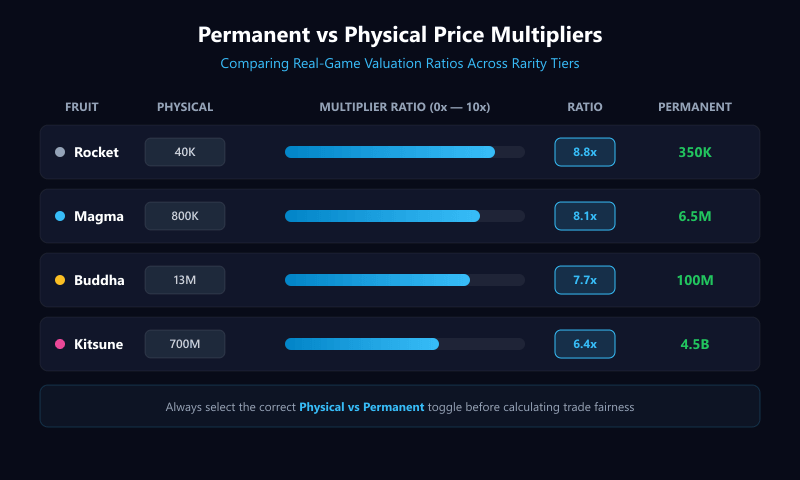
Compare value charts side by side whenever a list separates the two versions. Never quote one value for the other — using a physical price for a permanent trade, or the reverse, is a fast way to end up in an unfair deal.
When Physical Fruits Are Worth More
Know when physical is enough for casual players who don’t plan to keep grinding long-term. In these cases, paying extra for a permanent version doesn’t always make sense compared to the price gap involved.
| Type | Typical Trade Behavior | Risk Level |
|---|---|---|
| Permanent | Higher value, treated as an anchor | Low, can't be lost by using it |
| Physical | Lower value, single use risk | Higher, gone once consumed |
| Storage-gifted | Temporarily safe, still physical | Moderate, depends on handling |
| Value list entry | Listed separately when accurate | None, if not mixed together |
Storage and Safety Considerations
Check storage requirements first, since some fruits can be sent to storage for safety. A player might gift a fruit to store it temporarily, which affects how quickly it can be re-traded afterward.
How Trading Preferences Shift Value
Weigh convenience versus cost based on your own playstyle. Some traders happily pay more for a permanent version simply because it removes the anxiety of losing an item they worked hard for. This is a personal calculation, not a fixed rule, so trust your own comfort level over anyone else’s blanket recommendation.
Community Opinions on Permanent vs Physical
Review community opinions on both before assuming a fixed multiplier applies everywhere. The exact value multiplier between versions can shift slightly depending on the fruit and the current trading climate. Following a few respected traders or value-team members over time gives you a better sense of where consensus is heading, especially for fruits that don’t have a long, stable trading history yet to draw firm conclusions from.
Making the Right Choice for Your Playstyle
Decide the right fruit type based on how long you plan to keep playing and how much risk you’re comfortable with, not just on which version happens to be cheaper right now.
Using Comparison Tools for Clarity
Use comparison tools for clarity whenever you’re unsure. A dedicated calculator that separates permanent and physical entries removes the guesswork and keeps your next trade firmly grounded in accurate numbers. Running the same fruit through more than one tool before a high-value trade adds an extra layer of confidence, since small differences between calculators are far easier to catch before confirming than after.